


Beyond the Page: Winnebago Area Literacy Council Builds Community Through Literacy
By Amy Fontenot, Volunteer Writer
When we hear the word literacy, we tend to imagine words on a page, waiting to be read and understood. However, the Winnebago Area Literacy Council (WALC) is teaching beyond the book and seeking to expand its community’s literacy by connecting its neighbors through a shared interest: being human.
Literacy has always been about more than the mechanics of reading. We read to understand, certainly, but we also read to recognize something of ourselves in another person. We write to preserve what might otherwise disappear. We tell stories because there is something deeply human in wanting to say, I was here. This mattered to me. At the Winnebago Area Literacy Council, those ideas extend far beyond books and classrooms and into gardens, kitchens, workplaces, and the stories people carry with them.
Dr. Chu May Paing, executive director of WALC, explained that the organization serves a community rich with different cultures and experiences, with around 27 languages represented among the people they serve. Rather than seeing those differences as obstacles to literacy, WALC has found ways to celebrate them.
Spellbound, WALC’s long-standing fundraiser, is one example. The traditional spelling bee might be one of the most recognizable celebrations of literacy, but it is also built around a very particular kind of language knowledge. For someone learning English, spelling a difficult English word does not tell us much about the knowledge they already possess or the languages they already carry with them. So, WALC began reimagining the event.
Spellbound now incorporates educational and linguistic trivia designed to recognize the cultures represented within the community. A participant might be asked about the official language of Rwanda before being asked to spell the answer. It is a small change, but one that reflects something much larger about WALC’s approach: literacy does not have to ask people to leave one language or culture behind in order to embrace another.
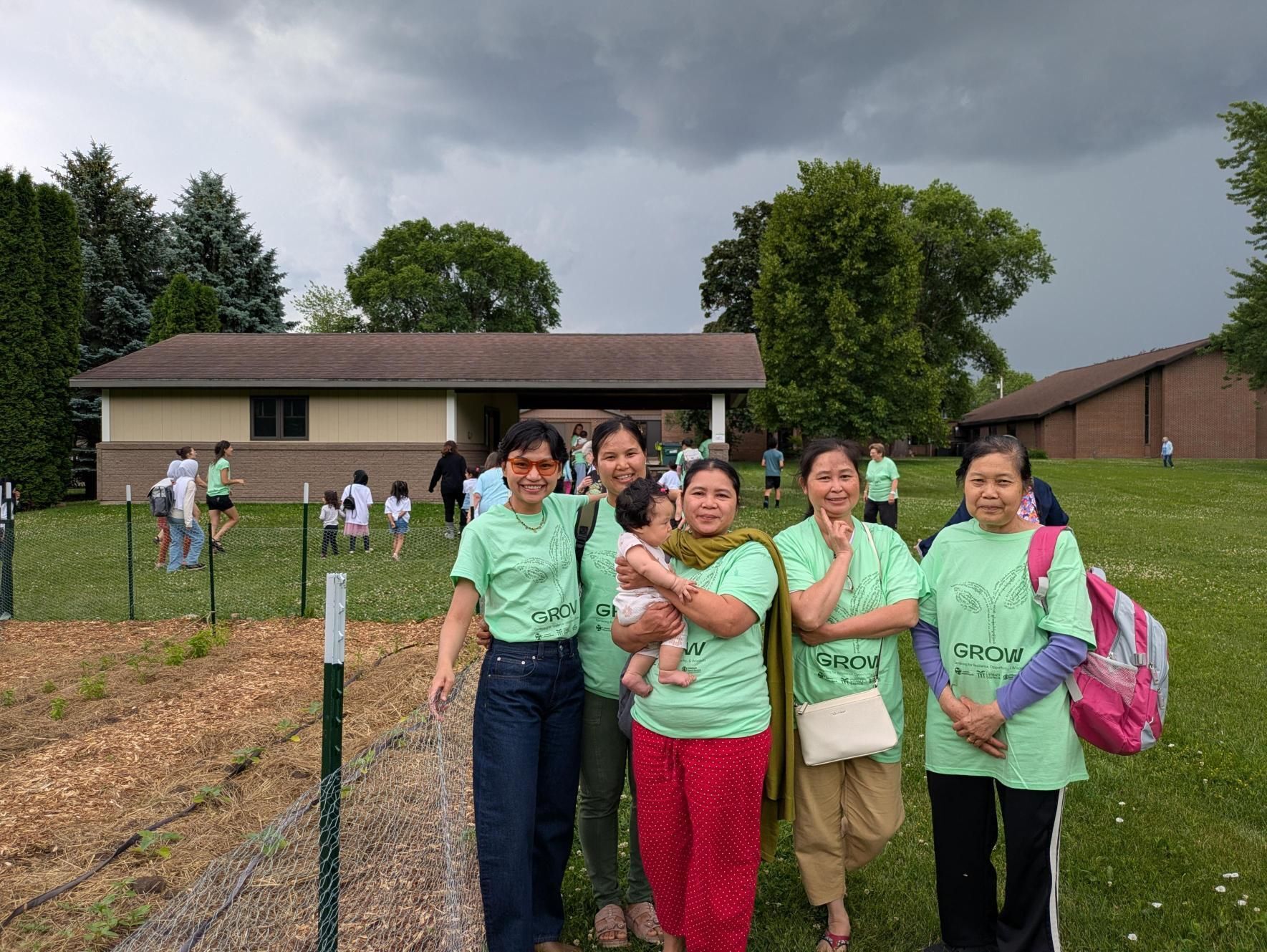
That philosophy becomes even more visible in WALC’s community garden, where people grow foods and plants from their home countries. Here, the traditional roles of teacher and learner become a little less clear. Someone who may be learning English in one space can become the expert in another, teaching a neighbor how a particular plant grows, how it is harvested, or what it means to the people who have grown it for generations.
Paing described this as an intentional effort to “flip that power dynamic” and place WALC in situations where its staff and volunteers are learning from the people they serve. On harvest day, those distinctions matter even less. Everyone is simply learning from everyone else, turning a garden into a place for literacy. People arrive with different seeds, different histories, and different ways of knowing, but they are growing alongside one another in the same soil.
WALC carries that same philosophy into the stories it helps preserve. Through Reading Between the Lines, a collaboration with professors and journalism students at the University of Wisconsin, students interview community members and help document their stories. Those stories are eventually collected and published in a hardcover book.
“At the end of the day, we are talking about people,” Paing shares.
It is an uncomplicated statement, but perhaps that is why it matters. Someone may arrive at literacy education because they are learning English, preparing for work, or developing reading skills later in life, but none of those circumstances tell the whole story of who that person is. Before they ever walk through WALC’s doors, they have already lived entire lives filled with families, traditions, memories, skills, humor, loss, work, and stories worth telling.
For community members who come from largely oral traditions, putting those stories into print also gives families something tangible to carry forward. A story once passed from one person to another can now sit on a shelf, waiting for a child or grandchild to open it years from now. Literacy, in this case, becomes an act of preservation.
WALC is beginning another project that approaches literacy from a similarly human place through a partnership between its Women and Children Program with the UWO Women and Gender Studies program. Designed for mothers and their children, the Women and Children program provides free childcare while creating opportunities for women to learn and share what they already know. One planned project in collaboration with UWO is a community cookbook featuring recipes from mothers alongside writing about the foods that remind them of home.
Paing points out that “sometimes women’s knowledge is not celebrated.”
There is knowledge tucked into kitchens that rarely makes its way into textbooks: recipes learned by watching a mother or grandmother cook, measurements known by feel rather than written instructions, and foods capable of carrying someone thousands of miles with a single familiar smell. A community cookbook gives that knowledge a place on the page. It also makes the exchange wonderfully simple. Food is one of those languages that everyone knows how to speak.
The impact of WALC’s work can also be measured in much more concrete ways. Around 100 people are served each year as they transition into working in the United States, and workplace literacy classes bring education directly to employees. Workers who began in entry-level positions have earned promotions after developing the reading and language skills necessary to move forward.
Here, literacy becomes something tangible. It can appear in a new job title, a larger paycheck, greater independence, or the ability to navigate a workplace with more confidence. That growth reaches beyond an individual learner, supporting families, employers, and the local economy.
WALC is supported in this work by Wisconsin Literacy, which provides resources and connection to a larger community working toward similar goals. Paing emphasized the importance of that support, particularly in a climate where federal programs and resources are being cut. Literacy organizations may work within individual communities, but they do not have to work in isolation.
When asked why continuing education matters, Paing’s answer was simple: “Learning is a lifelong endeavor.”
Perhaps that is what makes WALCs approach to literacy so compelling. Learning is not treated as something one person possesses and another lacks. Knowledge moves in every direction. Teachers learn from students. Neighbors learn from neighbors. Children can become knowledge producers within their families. A mother can preserve a recipe. A worker can discover new possibilities. A gardener can teach someone how to grow something they have never seen before.
Books have always offered us the extraordinary ability to step briefly into another person's world and discover that experiences we thought belonged only to us have been felt by someone else, somewhere else, too. WALC is creating opportunities for that same discovery to happen beyond the page.
Literacy is there in the words we read, but it is also in the stories we preserve, the recipes we pass down, the work we do, and the things we teach one another. It is interwoven into the fabric of our lives. Sometimes, it may even look like a group of neighbors standing together in a garden at harvest time, discovering how much there still is to learn from one another. Perhaps Paing said it best when she translated a saying from her native Burmese for me: “Those who seek knowledge, they will never grow old.”
