


Wisconsin Literacy Founder Reflects on a Remarkable Legacy
By Ia vanOpstall, Volunteer Writer
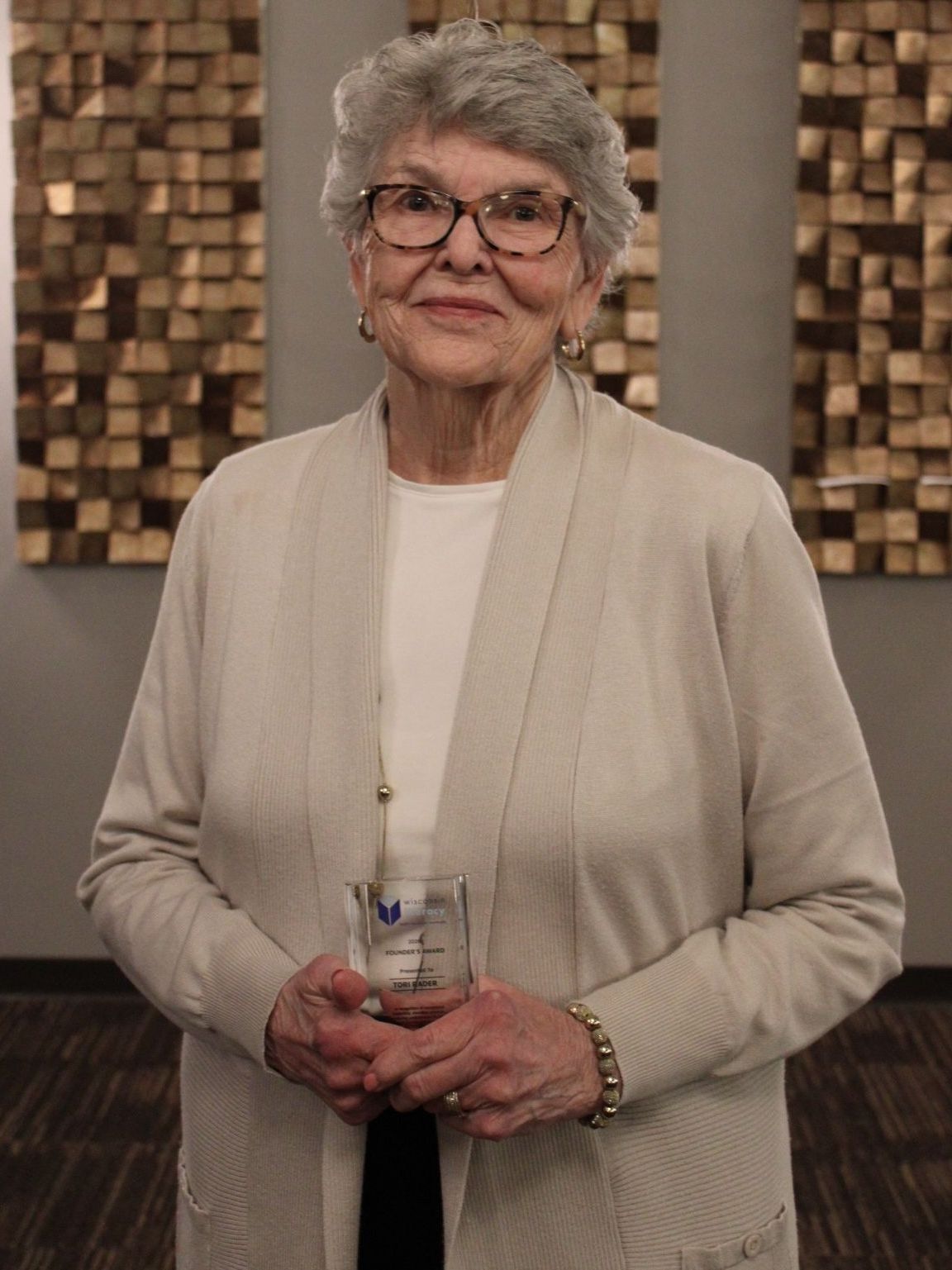
“Right people, right time, right place,” Wisconsin Literacy founder Tori Rader says, reflecting on the circumstances that brought the organization together in the 1980s.
A lifelong resident of Green Bay, Rader has left a lasting legacy in her community. Growing up, she loved diagramming sentences and often had her nose in a book. Her enthusiasm for storytelling and learning helped shape a principle that would guide her career: Everyone deserves the empowerment and confidence that literacy inspires.
With an education degree from St. Norbert College and experience as both a teacher and a mother, Rader became executive director of Literacy Green Bay in 1988. She understood the opportunities literacy could create, as well as the challenges facing small organizations working with limited funding and staff.
Local, volunteer-led organizations were doing the daily work of helping adults build their skills. As these organizations began putting their heads together, Rader helped advance an idea that would become Wisconsin Literacy: a statewide organization that could support their efforts and give them a stronger collective voice.
“And, of course, I ended up being the president,” she jokes.
Working essentially two jobs at once, Rader turned to the collaboration that had made local literacy organizations so effective. Lisa Schubert became Wisconsin Literacy’s first executive director, helping establish the organization’s direction.
“She’s just about the best you can get,” Rader says.
During the three years before her family moved to Seattle, Schubert helped define priorities that continue to guide Wisconsin Literacy’s work: advocacy, support for local organizations, and access to literacy education.
Schubert was succeeded by Michele Erickson, whose belief in literacy as a basic human right made her “the perfect person for that time period,” Rader says. Building the organization was never a one-person effort. Its strength came from people working together toward a shared purpose.
That collaborative spirit remains central to how Rader describes Wisconsin Literacy’s impact. Throughout her interview, she returns to the importance of recognizing the many people who helped the organization grow.
She also returns to the ways literacy touches everyday life: health, work, family, confidence, and independence.
“It’s these things you don’t think about,” Rader says.
Reading the instructions on a prescription bottle, for example, can present a significant challenge for an adult learner. Wisconsin Literacy’s work to make medication labels easier to understand reflects the connection between literacy and people’s ability to manage their health.
Within families, differences in language and reading proficiency can also create barriers. Literacy education helps parents communicate, participate more fully in their children’s lives, and build opportunities for the whole family.
For Rader, those practical skills are closely tied to something equally important: the confidence to use them.
She recalls a student who was asked to speak at an organization dinner early in Wisconsin Literacy’s history. He knew what he wanted to say and had practiced his words. But when the moment came, he froze.
The story is a reminder that progress involves more than mastering words on a page. Speaking in front of a room can be intimidating for anyone. Adult learners need opportunities to try something unfamiliar, make mistakes, and build confidence with support from the people around them.
More than forty years after Wisconsin Literacy’s founding, Rader still recognizes the vision she and her colleagues shared. She describes the organization as a “conduit,” bringing local groups together so they can better support their learners.
“You need someone speaking for you in the community,” she says.
Rader credits volunteers, relationships with local businesses, and community participation on the board of directors with helping sustain that work. These connections provide both the resources and the shared commitment that literacy organizations need.
That support is especially important as organizations face funding challenges. In September 2026, Wisconsin Watch reported that federal funding losses had led Literacy Green Bay to reduce its English classes, while its waiting list had grown to 300 people.
In a statement shared on September 23, Rader expressed concern about what funding cuts mean for organizations with small staffs and limited resources.
“In my experience, volunteer non-profit organizations need state funding to thrive. It is extremely difficult to raise sufficient funds locally while running a nonprofit with a very small staff,” she wrote.
“Fewer adult learners will have access to services, and some small organizations may have to close their doors.”
For Rader, protecting access to literacy education means continuing the collective effort that helped Wisconsin Literacy take root. Having volunteered with several organizations during her retirement, she encourages others to find a place in that work.
“Consider joining your local program. Call them, talk to them, and see if you’re a good fit,” she says. “We need you!”
As Wisconsin Literacy recognizes her contributions, Rader is adamant that Schubert, Erickson, and the many others who helped build the organization share in that recognition.
“I’m accepting it on behalf of all these people,” she says.
Looking back, her pride comes from seeing their work continue through the organizations and learners Wisconsin Literacy supports.
“I really believed in the cause,” Rader says. “I look back and I, as well as the people I worked with back then are so proud that it’s continuing. That the work we did bore fruit.”
“You know, you were tired when you did it [...] but wasn’t it all worth it?”
